
Why I Left Toronto to Chase Art in Montreal Toronto was never just a city to me. It was the place where dreams were supposed to spark bright lights, huge ambitions, global stage. I believed the hype, I worked like I was chasing a seven-figure future; I hustled because success in Toronto felt like validation. But over time, I realized something: all those skyscrapers were casting shadows where I wanted to shine.
There’s pressure in Toronto: the cost of rent, the grind, the constant performance. When you try to be creative there, your creativity pays a high tax, you’re too busy paying the rent to really live your art, you’re too busy surviving to allow yourself to fail, to experiment, to breathe.
Then I came to Montreal. I didn’t just change cities, I rebelled quietly, not in a loud, angry way. In a creative way. In a way that felt like reclaiming the part of me Toronto had pressed too tightly, and what I discovered mirrored nothing like the rat race I left.
A Tale of Two Cities: Vibe, Cost, and Creative Space
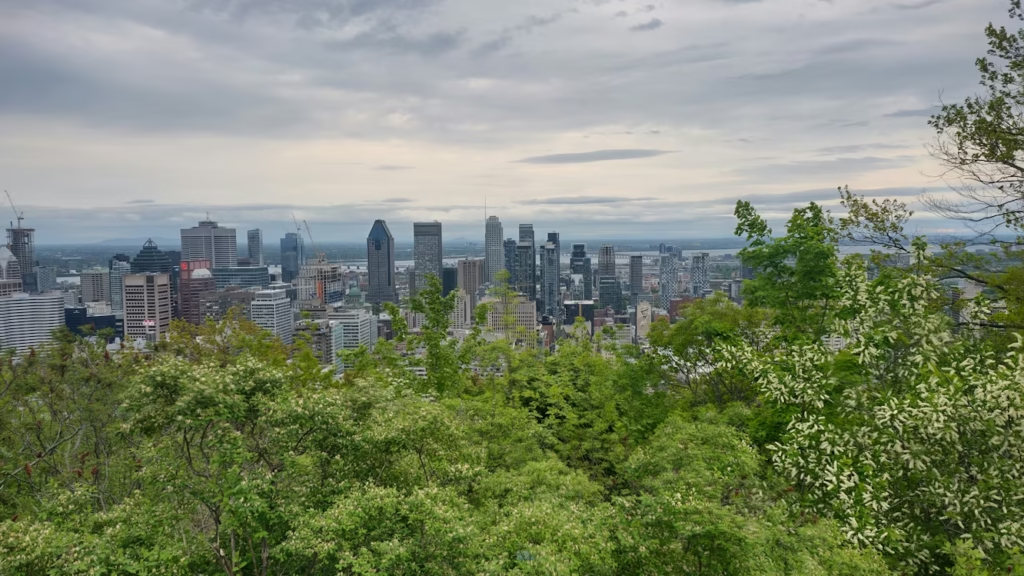
The Toronto Hustle, Toronto’s energy is relentless. I still remember my morning commute, squeezed into a streetcar, pretending to write in my head as people elbowed their way in, every minute was a transaction: time for money, money for status, status for something. Not quite peace.
You pay for everything: rent, transit, the “opportunity tax.” For a budding artist or writer, this tax is the worst — it taxes your time, your imagination, your freedom. In Toronto, I said “yes” to way too much: unpaid gigs, side jobs, weird collabs, just because I thought I needed the exposure more than I needed sleep.
Creativity in Toronto often demands you be a hustler first. You’re expected to be “relatable but ambitious,” “starving but successful.” That equation kills some dreams very quietly. Some nights, I’d write in a cramped apartment, just to hear myself think, but then worry the electricity bill would spike. The city gave me ambition, but it asked for my soul in return.
The Montreal Revolution: Montreal, though Montreal feels like a warm exhale. From the second I stepped off the train at Gare Centrale, the air felt lighter. The streets held more than transactions they held conversations, ideas, and unfinished poems.
Here, creativity is allowed to breathe. You don’t need to prove you’re building a startup or scaling up your “personal brand.” You can just be. A painter, a poet, a DJ, or a designer. The city doesn’t force your ambition into a shape; it just offers you space to shape your ambition how you like. Rent is lower (relatively), the neighborhoods are more affordable, and there is actual room for studio space. More than that there’s a supportive creative community. Cafés double as co-workspaces, art shows happen in converted warehouses, and the lines at poetry readings feel less performative and more connective.
Culture Clash: Language, Art, and Rebellion, one of the first things I noticed about Montreal was how language itself became part of the art. French and English mingle on street signs, in galleries, on stages, in random conversations. That mix feels like creative electricity, like a low hum you didn’t know your heart had.
In Toronto, there’s a kind of generic ambition a one-size-fits-all hustle. But Montreal has character. It challenges you to pick a lane, or better it gives you permission to build your own. There’s grit in the potholes of Plateau streets, poetry in the old red brick buildings, and laughter in the late-night bars where artists hang out long after their sets.
Montreal’s rebellion isn’t loud. It doesn’t need to be. It’s subtle: in how a street mural refuses to be framed, in how a musician plays for 20 people who actually listen, in how indie theaters run on passion, not profit.
Everyday Life: More Real Than Instagram
In Toronto, “authentic” often felt curated for social media. Brands, profiles, people everything wanted to look polished, like it belonged on a magazine cover. But in Montreal, the authenticity is real: half-finished murals, dusty vinyl shops, people riding e-bikes through narrow cobblestone streets, writers sprawled on benches working on their next line.
My morning routine changed drastically. In Toronto, coffee came from overpriced specialty shops; in Montreal, I find cozy cafés where baristas smile at you because they’re happy to just have a conversation. My day isn’t just about making money now it’s about making meaning.
Sometimes I catch myself sitting on my balcony, looking at the rooftops, the chimneys, the old stone facades, and thinking: “Wow… this is real.”
Financial Realities & Creative Risks: Leaving Toronto to live as a creative in Montreal was a gamble. I gave up a more stable “hustle job” to take smaller, weirder gigs. But in Montreal, the cost of taking that risk doesn’t feel like self-destruction. It feels like an investment.
I rented a small apartment in Plateau-Mont-Royal enough room for a desk, a painting corner, and a tiny record shelf. I budgeted my income differently. Instead of trying to save up 100% of my costs, I accepted that some months will lean more on creativity than cash, and you know what? It’s working.
I’m doing commissions, I play open mics. I collaborate with other artists. I’m not getting rich, but I’m richer in time, in purpose, in satisfaction, In Toronto, I was building a brand I hoped someone would pay attention to. In Montreal, I’m building my craft just for me, and sometimes for my community. That shift matters.
The Creative Community: More Than a Network: In Toronto, the creative “network” often feels transactional. Everyone’s talking about “connections,” “visibility,” “growth.” But genuine support? Sometimes it’s hard to find, In Montreal, I found something else, a creative family.
I share studio space with painters, sculptors, and filmmakers, I go to open-mic nights where the stage feels welcoming, not competitive, I bump into poets in cafés and DJs in basements. And every time I attend a gallery opening, someone smiles at me with real excitement not staged applause.
The community here listens. It critiques. It offers help. It celebrates failures as much as successes. There’s also less vanity. People don’t hustle just to look busy. They hustle because they need to create, to push ideas, to live artfully.
Challenges Aren’t Gone Just Different
I can’t pretend moving to Montreal was easy. There’s still pressure, still bills, still rejection. Some days, I miss Toronto, I miss the high-rise view, the skyline lighting up at night, the feeling that I was somehow part of something huge.
I miss the millions of people. I miss the noise when I want it. I miss opportunities that only a global city brings.
But there are also nights I don’t miss the anxiety. There are nights I don’t feel like I’m performing life for Instagram or LinkedIn. There are nights I go to sleep tired in a different way — not drained by ambition, but fulfilled by purpose.
And that’s okay, My Creative Rebellion: More Than a MoveI didn’t just move cities.
I rebelled, I rebelled against a version of me that believed success had to come at a cost. I rebelled against the idea that art has to be profitable to be valid. I rebelled against constant hustle that left me empty. Montreal gave me permission to be messy, to create without guarantee, to exist with uncertainty.
I feel like I belong here not just because of geography, but because of values. The city values creativity. It values risk. It values soul, In Toronto, you are part of the machine. In Montreal, you can build your own machine or not build one at all.
Why This Rebellion Matters
I write this for anyone who’s sick of being busy all the time. For anyone who’s sacrificed their sleep for a “career” and lost a little piece of their heart in the process. For creatives who feel like the city doesn’t understand them, or maybe even demands they compromise too much to survive. If you’re thinking about Montreal: don’t romanticize too early, but do consider this: Maybe your art can breathe here.
Maybe you don’t need to hustle 24/7, Maybe peace is not failure.
Because creativity doesn’t always come from struggle. Sometimes it comes from stillness.
The Real Trade-Offs
Leaving Toronto for Montreal wasn’t free.
Here’s what I traded — and what I gained:
What I traded:
High salary stability
Big-city networking reach
The “biggest opportunities” (or at least, what seemed like them)
The idea that I was “making it” in the most obvious way
What I gained:
Time to create
Space in my mind
A community that values art, not just hustle
Artistic permission to fail
A life that feels more mine than ever
Final Thought
Toronto and Montreal aren’t enemies. They’re just different.
Toronto is the engine fast, powerful, tireless.
Montreal is the heartbeat deliberate, rhythmic, soulful.
Some people need the engine. Some people need the heartbeat.
I ran from Toronto not because it was bad.
I ran because it wasn’t right for me.
And in Montreal, I found a different kind of rebellion — one fueled not by ambition alone, but by creative freedom, by belonging, and by a quieter, more honest kind of dreaming.
If you’re here, thinking about leaving the hustle behind and making art on terms that feel real — maybe this is your sign, too.
